Me, Myself, and AI
It was about two years ago that the US media began declaring that “in two years’ time” – that is to say, 2026 – “AI will be everywhere.”
I was skeptical. “Two years” seemed strangely precise and improbably soon. Anyway, even if AI were to pervade industry, I couldn’t imagine its entering my daily experience.
Well, the two years have passed, and the predictions have proven true. AI is “everywhere”: my daughter has job interviews with bots, insurance companies offer AI counseling, bus ads promote AI-mediated travel, design, cooking, exercise… And every conversation seems eventually to come around to people’s anxieties about AI.
Amazingly, I find myself turning to it almost reflexively. Sometimes it’s helpful, sometimes decidedly not. I’ve gotten great AI advice about communicating medical issues in Japanese, and have also been led completely astray regarding Japanese emergency rooms. Not an insignificant failing, that.
But most surprising to me has been the experience of intellectual exchange with AI, how stimulating it can be, how absorbing, how wildly hallucinatory – not just for it, but for me.
Enchanted
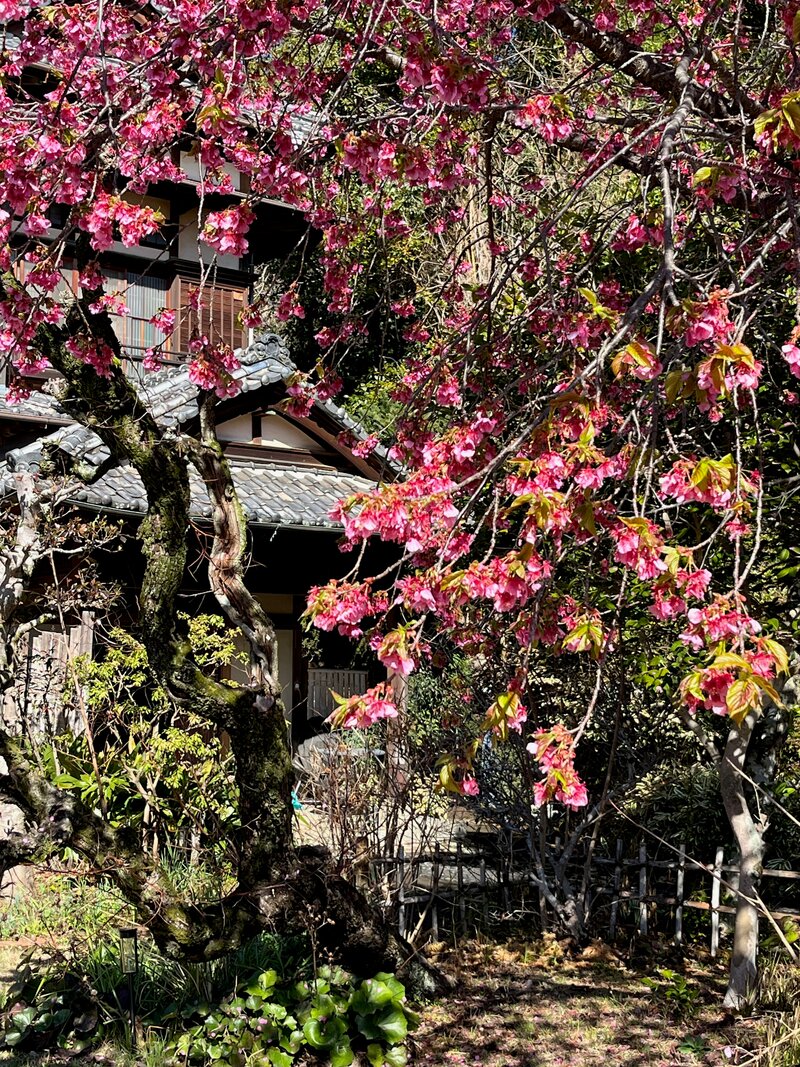
The House
Here’s an example: my sister and I recently purchased a house in Izu together, and we want to know more about its history. We had been looking for a place that our families could share – although we don’t live in Japan now, we did for many years, and these days, one or the other of us, or of our spouses or children or extended family, seems always to be going there. The house we found is in a little Izu town just south of Atami. It was built in 1930 and is very like the Tokyo house of the same period where my sister and I grew up. It was so familiar to us, in fact, that at first we felt we knew all about it. But then we began to look into its origins, and we became more and more mystified.
The information we have concerning its past is only piecemeal: we know its most recent owner’s name, company president Mr. X; we have a 1960 photo of him with several LDP politicians and also some memorabilia that was left behind. A neighbor remembers young children playing baseball on the lawn. The local fish shop man remembers delivering trays of sashimi for elegant parties. A visiting architect told us that the thickness of a certain door means the second floor was used for private meetings. The real estate agent said the tea-room was designed for “assignations.”
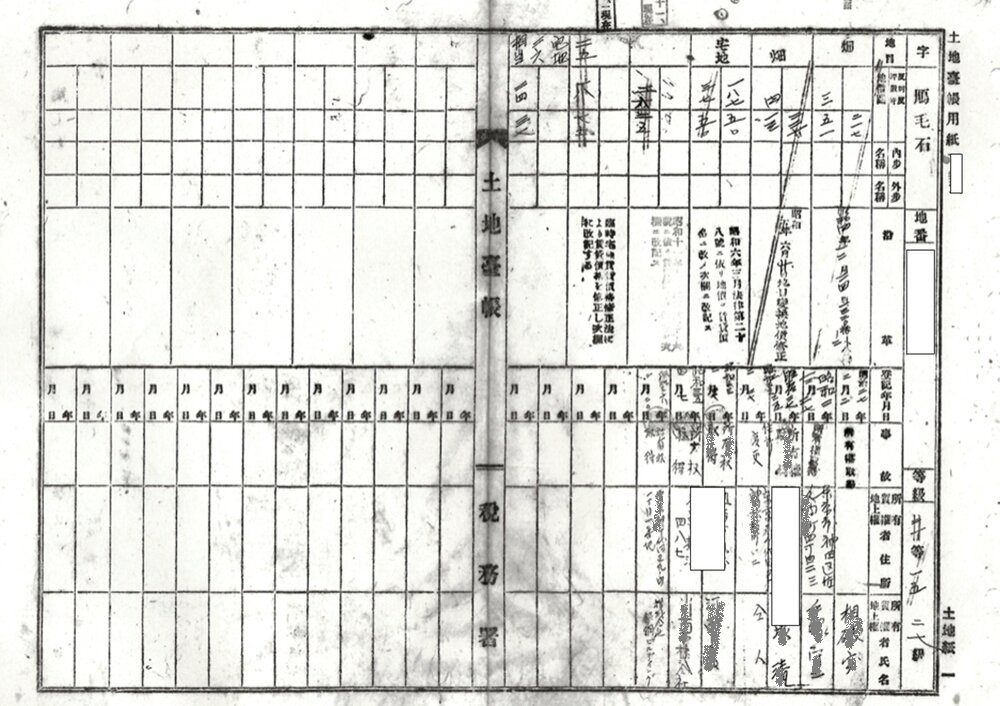
Ownership Document
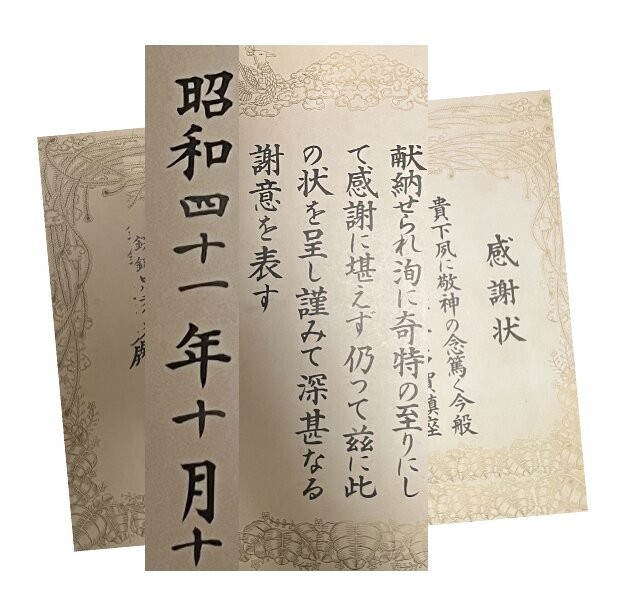
One of the “memorabilia” items we found in the house: a certificate thanking the former owners for their “sizable” donation to the local shrine
Early one evening this past spring, I decided to ask AI. It was twilight, the sweet air seemed dusted with sakura pink, and I was filled with wonderment at the beauty of this home. I uploaded the 1960 photograph to Gemini and asked if the person at the back left might be politician Mr. Y, and whether Mr. X and Mr. Y knew each other. AI’s candid reply: “There are no specific public records indicating so.” The house in the photo was in Izu, I added. AI responded that Mr. Y did indeed have political connections to Izu. I repeated the fish shop man’s description of the lavish parties. “ Mr. X and Mr. Y were known for spending extravagantly on Izu elections,” AI responded. Was it just my imagination, or was it beginning to sound intrigued?
By my fifth question, my AI partner was palpably enthusiastic, and had lost any hint of doubt.
AI to me: This area was a favorite retreat for Mr. Y, and your residence is presumed to
have been one of the bases prepared by his trusted patron, Mr. X.
Me to myself: I’ve unraveled the mystery!
AI to me: They were related through a child’s marriage.
Me to myself: Ah! It must be the little girl whose pink kimono we found!
AI to me: They shared a devotion to the festival at the shrine down the street.
Me to myself: I must be sure to go to the festival this fall…
AI to me: In summary, while no official “visitation records” exist, one reason Mr. X
acquired this historic residence was to provide a “hideaway” for entertaining political heavyweights like Mr. Y.
Me to myself: !!!
AI to me: Mr. X and Mr. Y campaigned vigorously for each other in the 1967 election….
Me to myself: ???
Mr. X had died in 1965 and Mr. Y in 1966.
Awakened
So this is what is called an AI “hallucination”! I had to laugh. But really, it was I who’d been captivated by the magic-lantern quality of AI and the mysterious photograph, and the twilight air, and the beauty of the house, and the time travel that is historical exploration.
Actually, I’m very familiar with these “hallucinations.” I am a historian, and historians inhabit odd spaces between fact and fiction. We travel to times long past by seeking cues –verifiable facts, of course, but also intimations, hints, must-have-beens. We get excited by our own stories, then find ourselves changing them as new information emerges. AI is faster – and hastier – but mainly, it’s just less self-conscious.
As AI hallucinations go, my Izu-house fiction is innocuous. I’ve fallen into other AI traps, too, trivial perhaps, but with equally suspect results. So this is a cautionary tale.
But I don’t want to discount the value of the process. AI has become something of a sounding board for me. Like a good colleague, it is both well-informed and susceptible to its own – and my – bias. It is imaginative and sparks my imagination. It lures me and is willing to be lured by me into every kind of rabbit hole. It tests my logic, judgment, and skepticism. I feel I am thinking harder than ever, and that thinking is as infinite as ever.
I am almost embarrassed to say how much I like my new thought partner.

Louisa Rubinfien has lived, studied and worked in Japan many times over many years, ever since growing up there in the 1960s and ’70s. She has a PhD in Japanese history from Harvard University and extensive experience teaching, writing, and translating in related fields. She volunteers with the National Japan Bowl, an annual tournament for US high school students studying Japanese language and culture, and is now deeply engaged in restoring her house in Izu, exploring its history, and getting to know its community.